Sunday, September 30, 2007
Flicka Goes to the Pub!
Thursday, September 27, 2007
Flicka's Big Adventure
Wake up Flicka we are going out for the day! Flicka likes her bed and it can be difficult to get her up in the mornings. She was very grumpy as we drove to the station, but she soon perked up when she found the bar of Ginger chocolate and she ate far more of it than me or Karen. It was by favourite Green and Blacks Ginger chocolate! Anyway she behaved herself on the train and hid in her rucksack when the ticket collector came round (we couldn't afford a ticket for her) At 10.30 we arrived at Waterloo. it was a little overcast and very windy so she just stuck her head out of the rucksack until we got to the London Eye. She was so excited and really enjoyed her flight.She memorised all the landmarks so we wouldn't get lost later when we were walking.
After coming off the Eye we walked along the Thames to Tower bridge where we had lunch. It was a surprise to see several Cormorants on the Thames. We crossed over Tower bridge and walked back along the other side calling in at Southwark cathedral. They don't charge you to enter but do ask for £2 for a photo permit which we were happy to pay. We then continued up to Jubilee bridge and crossed over to get more views of the Eye. We continued on to Westminster bridge and crossed over the Thames again.
By this time Karen and I were very tired we had been walking most of the day so we went back to the station in plenty of time to get the 7.05 train home. The train was very crowded as it had been reduced to five carriages, it was lucky we were early or we would have had to stand all the way home!
A day out with Flicka.
Monday, September 24, 2007
keyhaven and Lymington Nature Reserve
Friday, September 21, 2007
Eling Tide Mill
Eling Tide Mill is a water mill that harnesses the power of the tide to grind wheat into wholemeal flour.
Situated on the edge of Southampton Water beside the renowned New Forest, there has been a mill on the site for over 900 years, although it has had to be rebuilt several times, with the current building being some 230 years old. Tide mills were once an important part of the economy of many countries, such as Great Britain and the United States of America - the latter having many hundreds of tide mills on the eastern coast from the 17th to 19th centuries. Tidal power was harnessed in this fashion not only for milling flour, but for everything from sawing lumber and operating the bellows and hammers in ironworks, to manufacturing paper and cotton, to grinding spices, pepper and gunpowder. Before the advent of the steam engine they were the one kind of large-scale mill that was pretty much guaranteed to be able to run 365 days of the year.
Unfortunately they suffered far more than the river and wind mills after they were gradually abandoned in the 19th and early 20th centuries, and very few survive even as derelicts. There are only four tide mills open to the public in the entire United Kingdom, and none at all in the U.S.A.
Eling Tide Mill, although abandoned in the 1940s, had the great good fortune to survive until it was restored between 1975 and 1980, at which time it re-opened as both a working mill, and a museum to this part of our industrial heritage. It is the only fully working and productive tide mill in the United Kingdom, once again producing flour as it had throughout the last Millennium. It is, in fact, one of only two productive tide mills in the entire world (to the best of our knowledge), and the only one producing what it was built to produce.
More Bird Watching at Goatee Beach
Thursday, September 20, 2007
Lost Again
When we started our walk this morning it was damp and windy. Flicka wanted to stay in her bag and she was rather grumpy. Anyway we persuaded her to come and she was enchanted by the baby Donkey. She wanted to go fr a ride but we persuaded her not to and we walked on. Well we turned right three ties on our walk and should have ended up back at the car. Three and a half hours later we finally did find the car. Dogs , Karen and I were very tired. Flicka was safe and warm in her bag
Out and about with Flicka
Saturday, September 15, 2007
Shatterford
We took the dogs to Shatterford today. The last time we tried to walk there they were working on the bridges and we weren't able to do a complete circle. The Forest is much dryer now as there has been no rain whilst we were on holiday. The heather has nearly finished blooming but we did find some purple patches for the dogs to pose in. There were lots of dragonflies about and I did manage to capture to of them. A Common Darter and A black Darter I think!
Friday, September 14, 2007
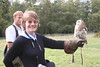
Flicka Comes Birdwatching!
We took Flicka birdwatching this afternoon. She was a little worried about the Foot and Mouth Sign on the gate, but we explained that we were not in an exclusion zone and she was Ok . We were lucky enough to see the Kingfisher again , although he did not stay long. We also saw green sandpipers and a Black tailed Godwit. No Egrets today. We did see plenty of geese flying around and a moorhen. There were some common darters flitting around and we did manage to get some shots of them.
Thursday, September 13, 2007
Introducing Flicka
Flicka is a pink flamingo. She has been travelling the World for the last two years, visiting dogs and for the next few weeks she is staying in the New Forest. She will be seeing the local sights before travelling on to other places in England and Europe. She has already been all over the US and Canada and also to Brazil.
OK, so yes I am mad but you already knew that.
I am putting up the photos from our holiday and after a week or so I will change the dates so they appear on the correct day.
The Swans at Hatchett Pond
Introducing Flicka the Pink Flamingo
Today we walked at Pigbush and then went to see if the swan family was still at Hatchetts Pond. All 7 cygnets have survived and are now very pretty juveniles. We wonder how long it will be before they fly off. Sadly the Ice cream van wasn't there today so we drove into Beaulieu to get some stem ginger ice cream and chocolate! It was delicious!
Wednesday, September 12, 2007
We are back!
Well we are home from our trip to Canada and I will be sorting through the photos (3000+) in the next few weeks and sharing our trip with you. We had a wonderful time, starting and finishing in Vancouver. In between we travelled in a motor home through the Rockies. In our absence the Dogs ruled the roost and got Iain to obey their every command!
Monday, September 10, 2007
Time to say goodbye
Sunday, September 09, 2007
Bike Ride in Stanley Park
It seems that the only way to travel in Stanley Park is by Bike! Here is our collection. Mine was the Pink one and the Yellow one is Mattie's pride and joy. I am not very good on a bike but when in Vancouver........at least the cycle tracks in the park are largely free of traffic, even if they are very busy with skateboarders, skaters and bikers.
I even got to try out Yellow Bike!I managed not to fall off or damage the bike and I did enjoy it!
The Vancouver Maritime Museum
Class: Auxiliary Police Schooner
Launched: May 7, 1928
At: Burrard Shipbuilding & Drydock Company, North Vancouver, B.C.
Length: 104 feet, 3 inches
Beam: 24 feet, 9 inches
Depth of Hold: 11 feet
Draft: 12 feet, 6 inches
Displacement: 323 tons
Rig: Originally schooner, now ketch
Built for the Royal Canadian Mounted Police Force to serve as a supply ship for isolated, far-flung Arctic RCMP detachments, St. Roch was also designed to serve when frozen in for the winter, as a floating detachment, with its constables mounting dog sled patrols from the ship. Between 1929 and 1939 St. Roch made three voyages to the Arctic. Between 1940 and 1942 St. Roch navigated the Northwest Passage, arriving in Halifax harbor on October 11, 1942. St. Roch was the second ship to make the passage, and the first to travel the passage from west to east. In 1944, St. Roch returned to Vancouver via the more northerly route of the Northwest Passage, making her run in 86 days. The epic voyages of St. Roch demonstrated Canadian sovereignty in the Arctic during the difficult wartime years, and extended Canadian control over its vast northern territories.
Retired after returning from the Arctic in 1948, St. Roch was sent to Halifax by way of the Panama Canal in 1950. This voyage made St. Roch the first ship to circumnavigate North America. Returned to Vancouver for preservation as a museum ship in 1954, St. Roch was hauled ashore in 1958. Housed over in 1966 and restored to her 1944 appearance by the Canadian Parks Service, the ship is the centerpiece of the maritime museum complex at Kitsilano Point.
RCMPV St. Roch is a Canadian National Historic Site.
Queen Elizabeth Gardens
We had another very hot day and in the morning we went up to the Queen Elizabeth Gardens. Whilst we were waiting for a cab we peered through the Windows of a small museum that houses one of Canada's famous Locomotives. CPR374 Was the first Locomotive to make the Journey over the Rockies. The Museum was closed but we managed to get a photo through the window.
The Gardens have wonderful views over the City and although parts were closed because of the Council workers strike we had a pleasant stroll around them.
May 23, 1887 was a great day for Vancouver, when CPR Engine 374 pulled the first transcontinental train into the city. Crowds cheered, the city band played, ships in the harbour blew their horns, and hundreds of flags decorated the young city. It was a great day not only for Vancouver, but for the whole nation. The event heralded the completion of one of the greatest engineering feats of the century, a twin line of steel linking the new nation of Canada from coast to coast, ten years in construction.
In 1945, after many years of service, including the second World War, Engine 374 was finally retired. The engine was first placed in Kitsilano Park for all to see, and play on, but it suffered greatly from salt air and the passage of the seasons. In 1983, many dedicated citizens came to the engine's rescue, and began the herculean task of restoring the engine to its former glory. With additional funds raised through the Heritage Brick Program, the restoration was completed in time for EXPO 86, and there the refurbished engine was a prime attraction.
The unique Heritage Brick Program was a great success. $400,000 was raised for the refurbishing of the engine, by way of individuals who bought one brick or more for $20.00 each, and thereby had their names engraved on each of their bricks. Now all those "name" bricks are on display as part of the floor of the pavilion, much to the delight of all who contributed.
Now after more than 100 years, the engine has found its permanent home. The 374 Train Pavilion, stands in the heart of the city for all to visit and admire as a valued part of our nation's history.
Queen Elizabeth ParkA former stone quarry, the park was developed in the 1950s to include a pitch & putt golf course, paths and display gardens, and a large arboretum. -
Saturday, September 08, 2007
Granville Island
Well we made it back to Vancouver and we have a couple more days of our holiday left. The temperatures soared this last weekend and it was very hot. Granville Island is a medley of small shops, art galleries, food markets and museums. On every corner there are street artistes. it is packed with Vancouverites and holiday makers especially on a Saturday , which is when we visited. We sampled a Canadian specialty here, Buttertarts, they are like a very rich treacletart! There are two ways to get to the Island one my road crossing the Granville bridge and we came this way, but after several hours we returned by water ferry.
Granville Island was originally reclaimed from swampland in 1917 and used as a site for an iron and ship building works. By the 1960s it was a derelict wasteland and rubbish dump.In the early 1970s work began to restore the Island and it is now a thriving market place
Friday, September 07, 2007
Brackendale
Brandywine falls and Tantalus lookout

Whistler

We finally arrived at Whistler mid afternoon. Whistler is where some of the 2010 Winter Olympic events will be held and is one of the most famous of the Canadian Ski resorts. It is also one of the most expensive, the Winter playground of the rich! It is about 120 miles from Vancouver and a lot of work is being carried out to widen the narrow twisting road that leads up to the Village from the City. It is very touristy even in summer. As we were driving past it we had to stop and see , already they are promoting the games. We spent about an hour here before travelling on we still have a couple of places to stop before we find a camping ground for our last night in the RV.
Past valley lake and onto Pemberton
Our next stop was at Valley lake, there was a huge log jam here.
We still have about 200 miles before we get back to the outskirts of Vancouver.
From Lillooet to Caoosh Creek
This is the Fraser River as it runs through Lillooet.
More Jade outside the Tourist Information centre in Lillooet.
Seton lake is just a little way outside of Lillhooet, Just as we took these photos the rain started and for a while we thought we were in for a wet day.
The road we are travelling on is a small one and very hilly and not well maintained. We are following this creek for quite a while as we head towards Whistler.
From Cache Creek to Lillooet (Sept 7)
Now we are making our way towards Whistler.
(Canadian Hols start on Aug 24th)
Thursday, September 06, 2007
Driving on to Cache Creek
Our morning stop at The meadows in the Sky, meant we were well off schedule and we had to drive on stopping only for short breaks. We were soon back in the desert like regions and we were in for a cold night. The first camp ground we stopped up had no hook ups left , but they phoned another one about 50km down the road and said they had places so we drove on. We arrived very late but we were only a mile out of town and so we treated ourselves to a meal at the Sandman Hotel (The campsite had an arrangement with them that gave us a 20% discount)
We have another long days drive tomorrow as we have to get to the outskirts of Vancouver in order to return the RV on time the following day.
"Meadows in the Sky"
This was one of the highlights of our trip and we so very nearly missed it. We had found the entrance the previous evening , when we were looking for our campsite. We still had a long way to drive back to Vancouver and the road up to the meadows is 26km. That may not sound far but it is all up hill and had many bends, the maximum speed limit for much of the road is 20km. I knew it was late in the season for the mountain flowers, but I Just really wanted to go.
At 9am we were waiting at the gate for the road to open and up we went.We were only going to stay a short while before getting on our way.But it was just so beautiful.....there were still plenty of flowers and it must look really spectacular at the height of the flowering season. One of the guides told us that although the flowers are more spectacular early August, the midges and horseflies are very active as well! We went up after the first frosts which had been enough to kill the bugs but not the flowers.
Mount Revelstoke is a very small national Park and it was created in 1916 mainly to protect these meadows.
During WW1 Ukrainian Internees were lodged here from Sept to December in the hope that they could finish building the road, but the weather was so bad they spent all their time shovelling snow and chopping firewood. In the end the camp was closed and the Internees sent to the other camps in Banff national Park.
The whole road to the summit is only open for a very short season Usually from Mid July when the snow finally clears, until late September when the snows force them to start closing the road. (There are several gates on the road up)
We ended up spending the whole morning here , just enjoying the views, flowers and birds.
Wednesday, September 05, 2007
Northern Lights Wolf Centre
One sad fact they told us that in BC this year over 3000 "problem" bears had been shot as this was the cheapest solution. Now I realize this is only one side of the story....but 3000 bears seem like a lot of bears!
Here is their argument for the use of Dogs to deal with problem bears.
Karelian Bear Dogs were bred in Russia and Finland to hunt bears. Here in some parts of North America, bear dogs are part of bear management programs aimed at rehabilitating "problem" bears. Karelian Bear Dogs can be used to teach the bears to respect and avoid human areas. People create problem bears. If people are not careful with food and smelly garbage around their property or camp, it attracts hungry wildlife like bears. When bears learn to associate people with food, and learn that people are not scary, they become "habituated". A problem bear = "nuisance" bear = "garbage" bear = "habituated" bear.
A trained team of bear dogs and a dog handler work with the Conservation Officer (CO), usually in a chase situation. The bear is chased to a safe distance away, at which point the chase is called off. This tells the bear that it is a territorial dispute and not a predatory attack. The bear learns recognize the boundary of our territory and learns to stay away.
The problem in British Columbia (BC) is that it is illegal to chase bears with dogs because it is considered harassment of wildlife. But - the Hunting & Trapping Regulations allow off-leash chases of bears and cougars by dogs. So... a CO is not allowed to chase a bear with a dog. Instead it is chased by a gun.
October the 14th -22nd Is Wolf Awareness week.
The Natural Bridge
We had a short stop here before travelling on . We are still along way from Vancouver and time is running out!
Emerald Lake
Whilst we were in Banff, a taxi driver asked us if we had been to Emerald Lake , so we added it to the never ending list. Emerald lake is in Yoho national park, near Field. So it was very near to our campsite. Fortunately we arrive at the lake early as it soon got very busy with tourists. Most of them seemed to be on coach tours so they did not have time to walk all the way around the lake and we mostly enjoyed it by ourselves. The lake was very still and we had some wonderful reflections. Like lake Moraine the colour is constantly changing, but it is definitely a greener colour. I think I like this lake almost as much as lake Moraine.
Tuesday, September 04, 2007
The Kicking Horse and Yoho Rivers.
We were camping just outside Field this evening and after booking in to the camp site we drove up the road that led to the Takakkaw falls.They are the second highest falls in Canada and we would have liked to have seen them. Unfortunately the road is steep and narrow and contains two severe switchbacks, we had trouble negotiating the first and decided to back down whilst we could. We contented our selves with the smaller falls on the Kicking Horse River, where it joins the Yoho River.
Lake Louise
Magical Moraine Lake ReVisited (sept4)
The blue-green colour is due to glacial rock flour.
The lake, being glacially fed, does not reach its crest until mid to late June. However, when it is full, it is a beautiful shade of blue. The lake gets its color from the refraction of light off the rock flour deposited in the lake on a continual basis.
Johnston Canyon and the Lower Falls.
Hoodoos at Banff
An Egale soars high in the sky
In the distance you can just see the Banff Springs Hotel
Hoodoos are tall thin spires of rock that protrude from the bottom of arid basins and badlands. They are composed of soft sedimentary rock, and are topped by a piece of harder, less easily-eroded stone that protects the column from the elements.
Monday, September 03, 2007
Enormous Elk!
As we drove away from Vermillion lake, we heard some movement in the bushes. Some female Elk were having an evening snack. We drove slowly up the road and spotted some more. Then as we drove into the outskirts of Banff, still more were around the railway station. We pulled over and saw this magnificent Bull Elk rounding up his does and roaring. We were warned when entering the national Park that the Elk Rut was starting and to be careful, as these animals will charge people and can do a lot of damage. I took all these photos with a 15x zoom, and stayed well out of his way, but some tourists were trying to get closer and he did warn them off and charged, fortunately he was only warning them and they paid attention.They make even our Red deer seem very small and I would not want to tangle with one!It was a wonderful end to the day!
A Morning on Sulphur Mountain
The last time we were in Banff, in 2003 the gondola to sulphur mountain was closed because of the smoke from the forest fires. i wanted to go up even though I hate heights and cable car rides. So we drove up to the Gondola park and got in line. I asked the attendant how long the ride was and he said Three and a half hours. I nearly turned and ran. It actually takes about 8 mins and is a fairly smooth ride apart from when you go over the supporting pylons.The views were wonderful and the walk to the summit was protected with guard rails so I did OK. We spent a couple of hours enjoying the views and then had lunch in one of the restaurants before coming down.
Morning on Sulphur Mountain.
Vermillion lakes
Vermillion lakes are just outside Banff. In the winter the sunsets here are beautiful . We were there late afternoon and spent a few hours just watching the dragonflies and the reflections in the water. The road to the lakes is a no through road and very few people seem to venture down it. We had the lakes to ourselves and so we were able to relax and just enjoy the view.
)
Sunday, September 02, 2007
A walk through Marble Canyon
Kootenay's Marble Canyon was devastated by a fire, that burned for 40 days after a lightning strike in July2003. Smoke from these fires were responsible for the smoky skies we experienced on our last trip in Aug/sept 2003 and we were unable to visit this area. It also prevented us from doing much in Banff as the smoke rolled in and we decided to move away from the area, so it was nice to be able to come back and explore a little more this time
None of the Seven bridges that cross the Tokumm Creek were destroyed by the fire, but more than 17,000 hectares of forest burnt. and the Canyon was closed for safety reasons. new posts to support the guard rails had to be dug and at times the canyon is over 60 metres deep.
On August30th 2007 the canyon was reopened to the public, just two days before we arrived!
Already wild flowers and squirrels have returned.
A 1.6 Km Interpretive trail leads up to the thundering waters of the creek.
Fire weed and grass have already regrown and slowly the forest is regenerating.
Kimberley to the Entrance of Kootenay National Park
Saturday, September 01, 2007
Fort Steele
Fort Steele
before continuing our ride on the steam train