Thursday, September 13, 2007

Introducing Flicka


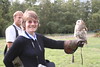
Flicka is a pink flamingo. She has been travelling the World for the last two years, visiting dogs and for the next few weeks she is staying in the New Forest. She will be seeing the local sights before travelling on to other places in England and Europe. She has already been all over the US and Canada and also to Brazil.
OK, so yes I am mad but you already knew that.
I am putting up the photos from our holiday and after a week or so I will change the dates so they appear on the correct day.

The Swans at Hatchett Pond


Introducing Flicka the Pink Flamingo


Today we walked at Pigbush and then went to see if the swan family was still at Hatchetts Pond. All 7 cygnets have survived and are now very pretty juveniles. We wonder how long it will be before they fly off. Sadly the Ice cream van wasn't there today so we drove into Beaulieu to get some stem ginger ice cream and chocolate! It was delicious!

Wednesday, September 12, 2007

We are back!


Well we are home from our trip to Canada and I will be sorting through the photos (3000+) in the next few weeks and sharing our trip with you. We had a wonderful time, starting and finishing in Vancouver. In between we travelled in a motor home through the Rockies. In our absence the Dogs ruled the roost and got Iain to obey their every command!

Monday, September 10, 2007

Time to say goodbye

After another walk in Stanley Park and a little time to do some shopping it was time to go to the airport.


Time to say goodbye to Mattie, before the long flight home. We had a wonderful holiday and I hope we will go back again some time!

Sunday, September 09, 2007

Bike Ride in Stanley Park

It seems that the only way to travel in Stanley Park is by Bike! Here is our collection. Mine was the Pink one and the Yellow one is Mattie's pride and joy. I am not very good on a bike but when in Vancouver........at least the cycle tracks in the park are largely free of traffic, even if they are very busy with skateboarders, skaters and bikers.

I even got to try out Yellow Bike!

Stanley park has a collection of Totem poles.


Only part of the seawall ride was open when we were there as it had been badly damaged in the winter by a freak storm that felled a lot of trees and washed away part of the sea wall.
I managed not to fall off or damage the bike and I did enjoy it!

The Vancouver Maritime Museum


Our next stop was the Vancouver Maritime Museum. The Main Exhibit is the restored St Roch. The ship is tiny but it was the second ship to sail through the North West Passage.

Its hard to believe just how tiny this ship is.

Class: Auxiliary Police Schooner
Launched: May 7, 1928
At: Burrard Shipbuilding & Drydock Company, North Vancouver, B.C.

Length: 104 feet, 3 inches
Beam: 24 feet, 9 inches
Depth of Hold: 11 feet
Draft: 12 feet, 6 inches
Displacement: 323 tons
Rig: Originally schooner, now ketch


Built for the Royal Canadian Mounted Police Force to serve as a supply ship for isolated, far-flung Arctic RCMP detachments, St. Roch was also designed to serve when frozen in for the winter, as a floating detachment, with its constables mounting dog sled patrols from the ship. Between 1929 and 1939 St. Roch made three voyages to the Arctic. Between 1940 and 1942 St. Roch navigated the Northwest Passage, arriving in Halifax harbor on October 11, 1942. St. Roch was the second ship to make the passage, and the first to travel the passage from west to east. In 1944, St. Roch returned to Vancouver via the more northerly route of the Northwest Passage, making her run in 86 days. The epic voyages of St. Roch demonstrated Canadian sovereignty in the Arctic during the difficult wartime years, and extended Canadian control over its vast northern territories.

Retired after returning from the Arctic in 1948, St. Roch was sent to Halifax by way of the Panama Canal in 1950. This voyage made St. Roch the first ship to circumnavigate North America. Returned to Vancouver for preservation as a museum ship in 1954, St. Roch was hauled ashore in 1958. Housed over in 1966 and restored to her 1944 appearance by the Canadian Parks Service, the ship is the centerpiece of the maritime museum complex at Kitsilano Point.

RCMPV St. Roch is a Canadian National Historic Site.

The Panipakuttuk family joined the ship to act as guides, interpreters and hunters.They lived on deck in this little tent.

Queen Elizabeth Gardens


We had another very hot day and in the morning we went up to the Queen Elizabeth Gardens. Whilst we were waiting for a cab we peered through the Windows of a small museum that houses one of Canada's famous Locomotives. CPR374 Was the first Locomotive to make the Journey over the Rockies. The Museum was closed but we managed to get a photo through the window.
The Gardens have wonderful views over the City and although parts were closed because of the Council workers strike we had a pleasant stroll around them.

May 23, 1887 was a great day for Vancouver, when CPR Engine 374 pulled the first transcontinental train into the city. Crowds cheered, the city band played, ships in the harbour blew their horns, and hundreds of flags decorated the young city. It was a great day not only for Vancouver, but for the whole nation. The event heralded the completion of one of the greatest engineering feats of the century, a twin line of steel linking the new nation of Canada from coast to coast, ten years in construction.

In 1945, after many years of service, including the second World War, Engine 374 was finally retired. The engine was first placed in Kitsilano Park for all to see, and play on, but it suffered greatly from salt air and the passage of the seasons. In 1983, many dedicated citizens came to the engine's rescue, and began the herculean task of restoring the engine to its former glory. With additional funds raised through the Heritage Brick Program, the restoration was completed in time for EXPO 86, and there the refurbished engine was a prime attraction.

The unique Heritage Brick Program was a great success. $400,000 was raised for the refurbishing of the engine, by way of individuals who bought one brick or more for $20.00 each, and thereby had their names engraved on each of their bricks. Now all those "name" bricks are on display as part of the floor of the pavilion, much to the delight of all who contributed.

Now after more than 100 years, the engine has found its permanent home. The 374 Train Pavilion, stands in the heart of the city for all to visit and admire as a valued part of our nation's history.


Queen Elizabeth Park

The top of this beautifully maintained 52 hectare (130 acre) park is the highest point in the city, at 167m (505 ft) above sea level. From the lookouts, visitors have a 360 degree view of the Vancouver skyline. The park receives nearly 6 million visitors a year who marvel at its superior standard of garden plantings.

A former stone quarry, the park was developed in the 1950s to include a pitch & putt golf course, paths and display gardens, and a large arboretum. -


Saturday, September 08, 2007

Granville Island


Well we made it back to Vancouver and we have a couple more days of our holiday left. The temperatures soared this last weekend and it was very hot. Granville Island is a medley of small shops, art galleries, food markets and museums. On every corner there are street artistes. it is packed with Vancouverites and holiday makers especially on a Saturday , which is when we visited. We sampled a Canadian specialty here, Buttertarts, they are like a very rich treacletart! There are two ways to get to the Island one my road crossing the Granville bridge and we came this way, but after several hours we returned by water ferry.
Granville Island was originally reclaimed from swampland in 1917 and used as a site for an iron and ship building works. By the 1960s it was a derelict wasteland and rubbish dump.In the early 1970s work began to restore the Island and it is now a thriving market place
heron

Afghan Hounds


Relaxing on Granville Island


Street Artistes


Cement transporters

Friday, September 07, 2007

Brackendale

Our final stop was at Brackendale

Every winter, thousands of bald eagles congregate on the shores of the rivers surrounding Brackendale to feed on the abundant spawning salmon. Hundreds of eagles at a time can be seen from the river dikes, feeding along sandbars or roosting in nearby cottonwood trees. Two dozen or more in a single tree is not uncommon. Eagle season in Brackendale is from mid- November to mid- February, with prime viewing in December and January.

No eagles for us , but we did sea a couple of seals in the river and watched them for a while

Finally after a long drive we reached an RV site just outside Vancouver, tomorrow we return the RV which did manage to get us there and back in one piece albeit with several problems. We now have a couple of days in Vancouver before flying home.

Brandywine falls and Tantalus lookout

We had another brief stop at the Brandywine falls.


before driving on to the Tantalus look out point.

Here we could see the snow covered mountains But with the sun directly above them we all found it very difficult to take photos.

We still have a way to go before we reach Vancouver so we had to press on.

Whistler


We finally arrived at Whistler mid afternoon. Whistler is where some of the 2010 Winter Olympic events will be held and is one of the most famous of the Canadian Ski resorts. It is also one of the most expensive, the Winter playground of the rich! It is about 120 miles from Vancouver and a lot of work is being carried out to widen the narrow twisting road that leads up to the Village from the City. It is very touristy even in summer. As we were driving past it we had to stop and see , already they are promoting the games. We spent about an hour here before travelling on we still have a couple of places to stop before we find a camping ground for our last night in the RV.

Whistler